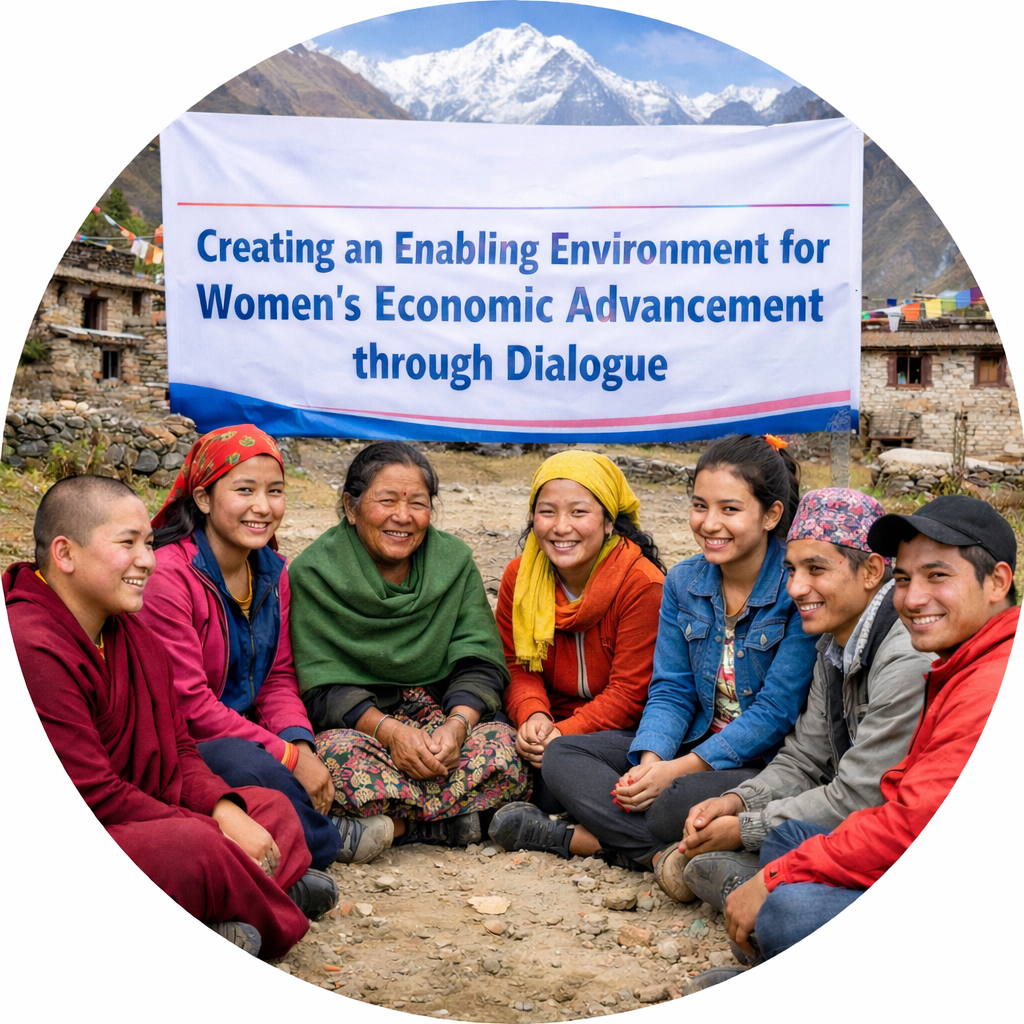
Project Overview
This project aims to strengthen women’s economic empowerment in Nepal by addressing structural barriers that limit their access to resources, decision-making, and income-generating opportunities. Implemented across Koshi, Karnali, and Sudurpashchim provinces, the initiative focuses on fostering gender-transformative dialogue to create lasting social and institutional change. Despite ongoing efforts, women, especially in rural and migration-affected communities, continue to face challenges such as limited asset ownership, restricted decision-making power, and lack of economic skills. The growing trend of male overseas migration has further increased women’s responsibilities without ensuring adequate support systems. This project uses structured social and citizen–government dialogue as a transformative tool to challenge harmful norms, promote positive masculinities, and build an enabling environment where women can actively participate in economic life.
Project Goal
To enhance women’s economic empowerment by strengthening:
Ø Asset ownership and control
Ø Decision-making power (household and public spheres)
Ø Access to income-generating opportunities
Where We Work
The project is implemented in 20 Local Government Units (LGUs) across:
1. Koshi Province
2. Karnali Province
3. Sudurpashchim Province
Key Strategies
Ø Capacity Building: Training 54 Dialogue Facilitators (at least 60% women) to lead inclusive, gender-responsive dialogues.
Ø Community Engagement : Formation of 100 Social Dialogue Groups engaging 1,500 community members.
Ø Seven-Step Dialogue Process: A structured approach fostering trust, empathy, reflection, and collective action.
Ø Citizen–Government Dialogue: Platforms for women and communities to directly engage with local and provincial authorities.
Ø Awareness & Advocacy: Social media campaigns, documentary, and publications reaching wider audiences.
Ø Sustainability: Exit strategy and formal handover to local governments for long-term continuation.
Expected Outcomes
Ø 60% of women report increased participation in household and economic decision-making.
Ø 80% of stakeholders recognize women’s positive role in economic development.
Ø Strengthened collaboration between citizens and government institutions.
Ø Shift in social norms towards gender equality and women’s economic leadership.
Key Results (Targets)
Ø 54 trained Dialogue Facilitators
Ø 100 dialogue groups conducting structured sessions.
Ø 2,900 individuals reached through awareness activities.
Ø 1,200 community members demonstrate commitment to women’s economic empowerment.
Ø 28 formal declarations endorsed by local and provincial governments.
Ø 75,000 citizens reached through social media outreach
Our Approach: Dialogue for Transformation
At the heart of the project is a seven-step dialogue process that:
Ø Builds trust through shared experiences.
Ø Encourages reflection on real-life challenges.
Ø Fosters empathy and mutual understanding
Ø Promotes inclusive thinking and positive masculinities.
Ø Supports personal and collective visioning.
Ø Identifies key economic and social barriers.
Ø Develops community-driven action plans.
This approach enables communities to challenge gender norms, strengthen relationships, and co-create solutions for inclusive economic development.


.png)


.png)